
Why Local Business Events Matter for Your Growth
Local business events connect you with the resources, training, and community you need to grow. If you’re feeling disconnected or struggling to find growth resources, attending these events can open doors you didn’t know existed.
You can find opportunities by checking community resources like your local Chamber of Commerce, Small Business Development Center (SBDC), and city government websites. Online platforms, including The Market Lovers and the SBA event calendar, also aggregate hundreds of events. Many of these are free workshops, webinars, and training sessions available in-person, virtually, or in a hybrid format.
Common event types include:
- Educational workshops and training seminars
- Networking mixers and coffee conversations
- Small business expos and fairs
- Industry-specific conferences
- Grand openings and ribbon cuttings
The SBA website alone lists over a thousand small business events covering everything from digital marketing to government contracting. Many of these opportunities are completely free, with organizations like local SBDCs and Chambers of Commerce regularly hosting workshops designed specifically for entrepreneurs like you.
What to Expect: A Breakdown of Event Types
Local business events come in all shapes and sizes, each offering unique benefits. Understanding the different formats helps us choose the right opportunities to invest our time and energy.

Let’s explore some of the most common types of small business events:
- Educational Workshops and Training Seminars: These are a direct way to acquire new skills. Led by experts, they cover specific business topics. The Small Business Administration (SBA) and Small Business Development Centers (SBDCs) regularly host free virtual and in-person trainings.
- Networking Mixers and “Coffee & Conversation” Events: These events are all about making connections in a relaxed environment. Local business organizations and community groups often host informal gatherings that are invaluable for building a professional network.
- Large-Scale Exos and Small Business Fairs: To reach a wider audience, these events are a fantastic opportunity. Local exos and fairs bring together numerous vendors and attendees and can dramatically increase brand visibility.
- Award Ceremonies and Celebrations: Community award events and year-end celebrations are important for recognizing achievements and celebrating local impact. Attending or being nominated for awards can boost a business’s credibility and exposure.
- Ribbon Cuttings and Grand Openings: These smaller events celebrate a new business launch or milestone. They offer a chance to support fellow entrepreneurs and network informally.
Common Topics Covered at Local Business Events
Workshops and training sessions cover practical and timely topics to provide immediate value. Here are some popular subjects:
- Digital & Social Media Marketing: SEO, online advertising, content marketing, and leveraging social platforms for brand building.
- Financial Planning & Management: Cash flow, budgeting, financial analysis, and software like QuickBooks.
- Access to Capital & Funding: Learning about loans, grants, and investment strategies.
- AI for Small Business: Using AI tools for efficiency, marketing, and customer service.
- Human Resources (HR): Hiring, employee relations, and legal compliance.
- Sales & Business Development: Sales techniques, crafting a business plan, and exploring new markets like government contracting.
- Legal & Cyber Security: Understanding trademarks, contracts, and protecting business data.
The Rise of Virtual and Hybrid Events
The landscape of local business events has evolved with a significant rise in virtual and hybrid formats, bringing unprecedented accessibility.
Online webinars have become a cornerstone of continuous learning. The SBA provides both virtual and in-person trainings, making it easier to find relevant opportunities. Virtual networking platforms also offer a way to connect with other entrepreneurs, meaning that even when we can’t attend an in-person event, we still have opportunities to collaborate.
The benefits of these digital formats are clear:
- Increased Accessibility: Attend from anywhere, removing barriers like travel time and distance.
- Cost-Effectiveness: Virtual events often have lower or no registration fees and eliminate travel costs.
- On-Demand Content: Many webinars are recorded, allowing you to watch them at your own pace.
- Wider Reach: Organizers can reach a broader audience, bringing in diverse perspectives.
Hybrid events, combining in-person and virtual elements, offer the best of both worlds, ensuring small business owners always have options that suit their needs.
Where to Find and Register for Events
Finding the right local business events is the first step toward open uping their many benefits. Fortunately, a growing ecosystem of resources is dedicated to helping small business owners find and register for these valuable opportunities.

The registration process for most events is straightforward, typically involving an online form. Many platforms also offer options to add events directly to your personal calendar.
Your Go-To Resources for Finding Local Business Events
Numerous organizations and platforms list and host events. Here are our top recommendations:
- The Market Lovers Event Calendar: As a dedicated resource for small businesses, our platform aggregates and highlights relevant local events to empower local shopping and foster community.
- Local Chambers of Commerce: These are hubs of local business activity. Chambers often provide detailed event calendars for professional networking, grand openings, and more.
- Small Business Development Centers (SBDCs): SBDCs offer free or low-cost training and maintain comprehensive event calendars in many regions.
- Small Business Administration (SBA): The SBA website is a centralized, government-backed aggregator listing thousands of events hosted by the SBA and its partners.
- City Government Websites: Many cities have dedicated calendars for business events, such as local small business weeks, expos, and workforce development workshops.
- Local Business News and Aggregators: City and regional business news outlets often maintain dedicated calendars or listings focused on local business communities.
To register, click on an event listing and follow the instructions. Subscribing to newsletters is a great way to stay in the loop for future gatherings.
Understanding the Costs
The cost of attending local business events is incredibly broad, with options for every budget.
- Nominal Fees: Some training sessions might charge a small fee to cover materials or venue costs, usually offering excellent value.
- Membership Benefits: Members of a local Chamber of Commerce often receive discounted or free access to events.
- Expo and Conference Ticket Prices: Larger exos and conferences typically have ticket prices. These can range from a modest entry fee for a local fair (some are free to attend) to several hundred dollars for multi-day conferences.
- Vendor Fees: If you participate as an exhibitor, there will be vendor fees, which represent an investment in marketing and customer engagement.
The availability of so many free and low-cost options ensures that financial constraints don’t have to be a barrier to business growth.
The ROI of Attending: Key Benefits for Your Small Business
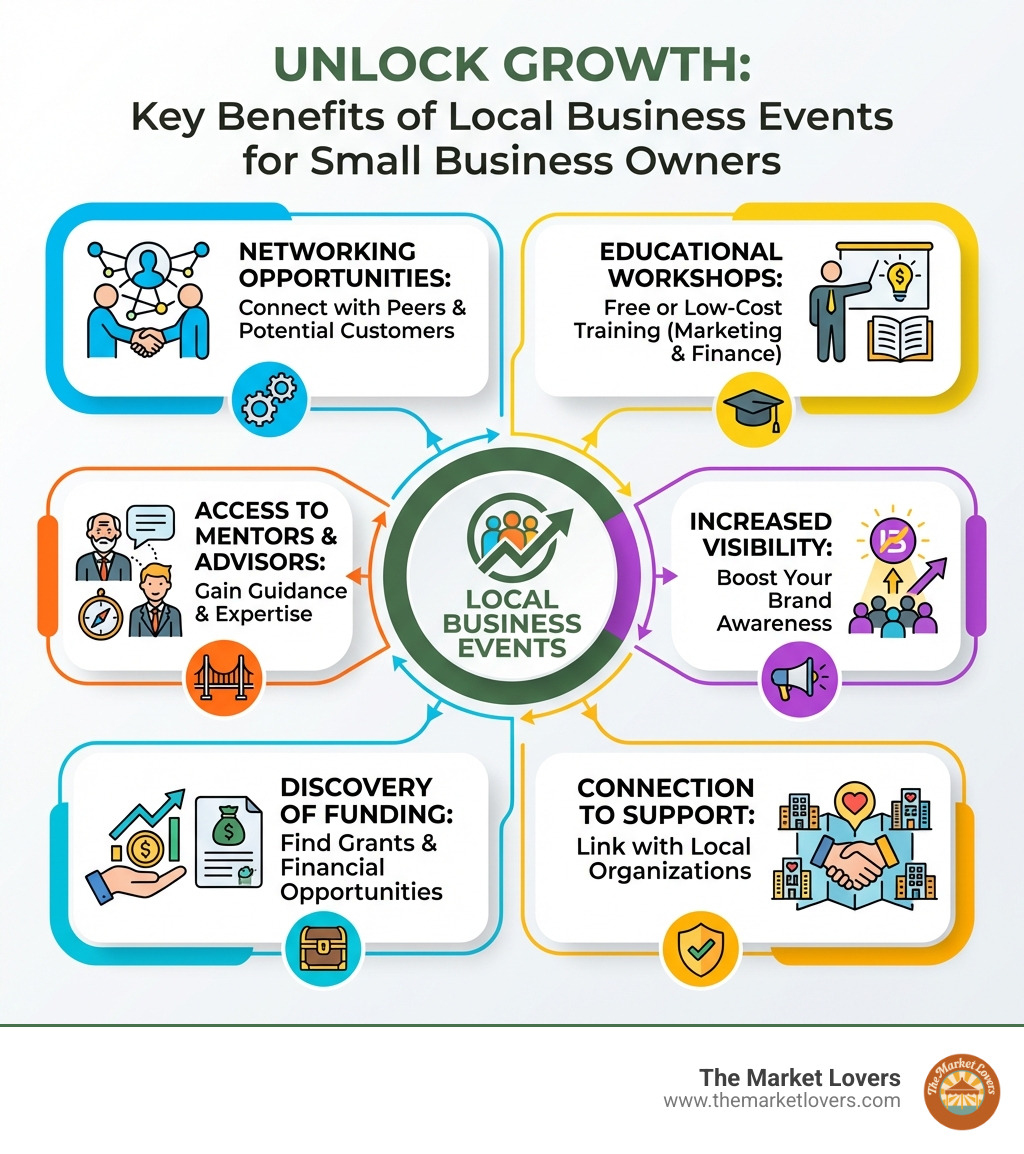
Attending local business events is a strategic investment of time that yields tangible returns. The “Return on Investment” (ROI) extends far beyond immediate sales, from expanding knowledge to forging crucial partnerships.
Here’s why you should prioritize attending these events:
- Networking Opportunities: Events are fertile ground for connecting with other entrepreneurs, potential clients, suppliers, and mentors, leading to collaborations and referrals.
- Skill Development: Workshops and seminars provide direct access to expert insights on critical business topics. The SBA and SBDC’s free trainings are perfect examples.
- Lead Generation and Sales: Exos and fairs offer direct interaction with potential customers, which can generate leads and boost sales.
- Brand Visibility and Credibility: Your presence at events increases brand exposure. Being recognized or winning local awards can significantly improve your credibility.
- Staying Current on Trends: Events provide a pulse on the latest industry trends, technology, and market shifts, helping you stay competitive.
- Finding Mentors and Advisors: Connecting with seasoned entrepreneurs can open doors to mentorship opportunities.
- Access to Resources: Events often feature representatives from financial institutions and support organizations who can provide information on grants, loans, and other resources.
The ROI of attending local business events is about building a stronger, more resilient, and more connected business.
Building Your Professional Network
One of the most powerful benefits of local business events is the opportunity to build your professional network. In small business, who you know can be as important as what you know.
Networking is about making genuine connections. When you attend events like Chamber of Commerce mixers or informal coffee meetups, you might meet collaborators, find peer support, or connect with a mentor. Online platforms also extend these opportunities, allowing you to build relationships both in-person and virtually.
Active participation can lead to:
- Referrals: Other business owners might send clients your way.
- Collaborations: Partner with another business to expand your reach.
- Problem-Solving: Discussing challenges with peers can provide fresh solutions.
- Emotional Support: A strong network provides encouragement and understanding.
Every conversation at a local business event helps build a robust and supportive professional network.
Fueling the Local Economy
Local business events are vital engines that fuel the entire local economy. As small business owners, we are the backbone of our communities, and these events amplify our collective impact.
When we attend or exhibit at a local fair, we directly contribute to our area’s economic vitality. Local small business exos and community fairs are designed to support local entrepreneurs and encourage local shopping. They create a vibrant marketplace that keeps money circulating within the community.
These events foster community spirit and celebrate innovation. Many chambers and business alliances highlight how their events contribute to local vibrancy and economic momentum. Furthermore, many events focus on workforce development, ensuring that businesses have access to the talent they need to grow.
Local business events create a positive feedback loop: they support individual businesses, which then contribute to a thriving local economy.
From Attendee to Host: Getting More Involved
After experiencing the benefits of attending local business events, you might wonder how to take your involvement to the next level. Moving from attendee to host or sponsor is a powerful way to increase your business’s visibility, establish authority, and deepen your community impact.
There are several ways to get more involved:
- Sponsorship Opportunities: Many events rely on sponsorships. Local business organizations and chambers often offer various sponsorship levels for their events. Sponsoring an event provides prominent brand exposure and shows your commitment to the local business community.
- Hosting a Workshop or Seminar: If you have expertise in a particular area, hosting a workshop is a fantastic way to establish yourself as a thought leader. Many SBDCs, and Chambers of Commerce seek qualified presenters to educate their members. This can attract new clients who value your insights.
- Becoming a Vendor or Exhibitor: To maximize engagement, become a vendor at fairs and exos. These are perfect platforms to directly showcase your products or services to a captive audience, leading to sales and customer feedback.
- Joining a Planning Committee: For those passionate about community building, joining an event’s planning committee offers deep involvement. This allows you to help shape the event’s content and outreach while networking with other community leaders.
- Speaking Engagements: Seeking shorter speaking slots at networking events or on panels can also boost your authority. Sharing insights at a coffee meetup or community roundtable can introduce your expertise to a new audience.
By getting more involved, you’re not just participating; you’re actively shaping your community’s business landscape, which can lead to stronger ties and new avenues for growth.
Frequently Asked Questions about Attending Business Events
We understand that diving into local business events can bring up a few questions. Here are answers to some of the most common inquiries.
How much do local business events typically cost?
The cost varies significantly, with options for every budget.
- Free Events: Many workshops, webinars, and training sessions are offered free of charge, especially from organizations like the SBA, and SBDCs. Some large exos are even free to attend as a visitor.
- Nominal Fees: Some local workshops may have a small fee ($10-$50) to cover materials or administrative costs, offering excellent value.
- Membership Discounts: Members of a local Chamber of Commerce often receive discounted or free access to events.
- Paid Exos and Conferences: Larger, multi-day events usually have higher ticket prices, which can range from $50 to several hundred dollars, reflecting more extensive programming.
- Vendor Fees: Exhibiting your business involves a vendor fee, which varies by event.
There are plenty of valuable local business events that are accessible without breaking the bank.
Are virtual events as valuable as in-person ones?
Both virtual and in-person local business events offer unique advantages, and the best approach often depends on your goals.
Virtual events excel in accessibility, cost-effectiveness, and flexibility. They remove geographical barriers and often provide on-demand content that you can watch at your convenience.
In-person events are often better for fostering deep, spontaneous connections. Face-to-face interactions can build stronger relationships, and the energy of a physical gathering can improve the experience.
Many organizations now offer hybrid events, combining the best of both worlds. The “value” comes from what you gain, and both formats can be incredibly useful for skill development and networking if you engage actively.
What should I bring to a networking event?
A little preparation goes a long way. Here’s a checklist of what to bring to a networking event:
- Business Cards: Still the standard for quick information exchange at in-person events.
- A Clear Elevator Pitch: Be ready to explain what your business does in 30-60 seconds to spark interest.
- Specific Goals: Know what you hope to achieve, whether it’s finding clients, collaborators, or mentors.
- An Open Mind: Go with the intention to listen, learn, and genuinely connect with others.
- A Way to Take Notes: Use a notebook or an app to jot down names and follow-up actions.
- Comfortable Attire: Dress professionally but comfortably for standing and mingling.
- A Fully Charged Phone: For digital contact exchanges or looking up information.
The goal is to build relationships. Being prepared and genuinely interested in others will maximize your success.
Conclusion
The journey of entrepreneurship is rarely a solitary one. As we’ve explored, local business events offer a vibrant ecosystem of support, learning, and connection that is indispensable for our growth. From the free training sessions provided by SBDCs to the busy energy of small business expos, these gatherings provide actionable growth strategies, foster community building, and keep us connected to the pulse of our local economy.
We’ve seen that whether we’re seeking to develop new skills in digital marketing, find crucial funding, expand our professional network, or simply celebrate the spirit of innovation, there’s an event custom to our needs. The rise of virtual and hybrid options has only expanded these opportunities, making continuous learning and connection more accessible than ever before.
By actively seeking out and participating in these events, we not only empower our own businesses but also contribute to the collective strength and resilience of our local business community. So, let’s accept the power of connection and knowledge.