Why Retail Marketing Strategies Matter More Than Ever
Retail marketing strategies are the coordinated methods businesses use to promote their products and services, attract customers, and drive sales across both physical and digital channels. Here’s what you need to know:
Core Retail Marketing Strategies:
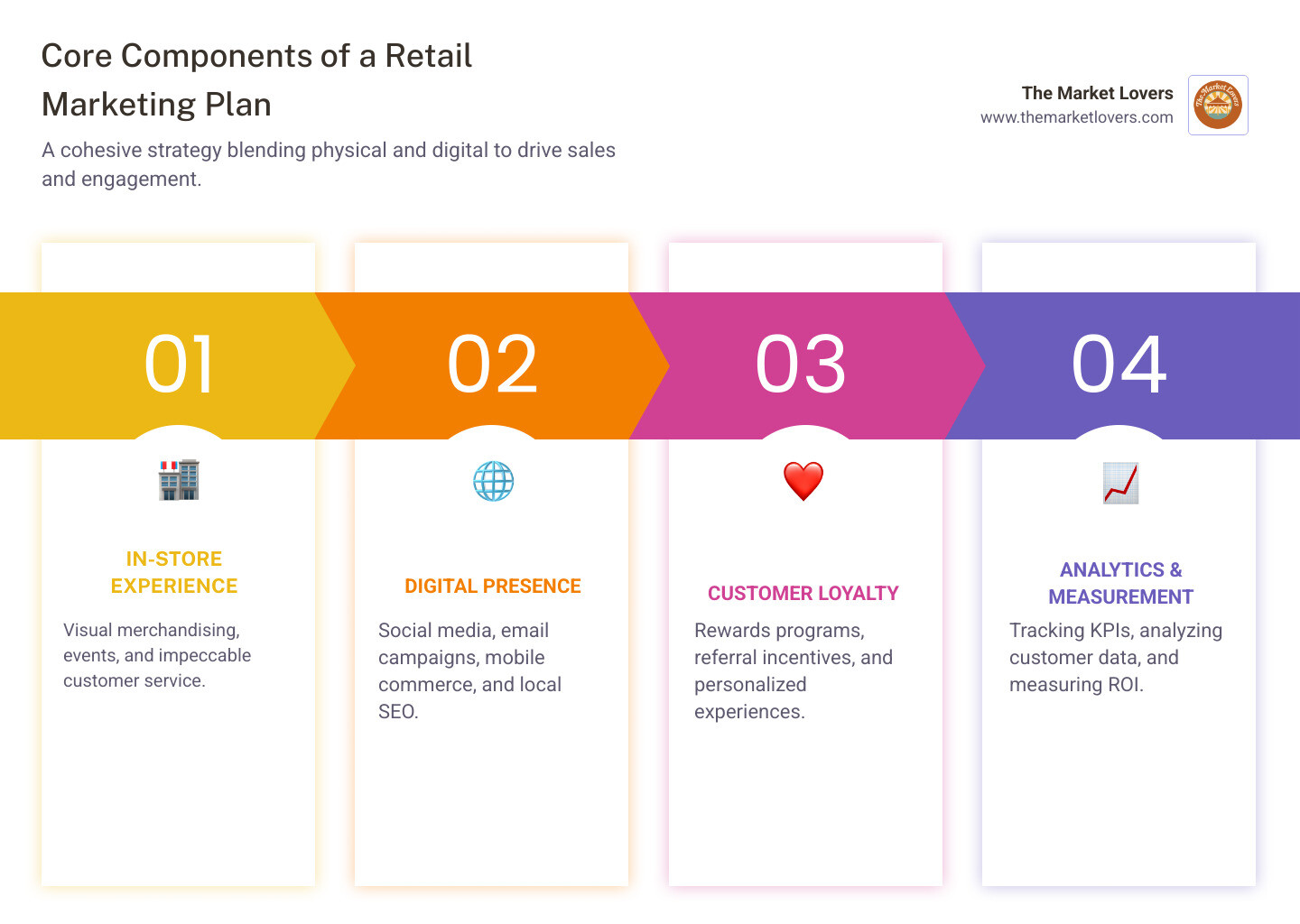
- In-Store Marketing – Visual merchandising, window displays, events, and customer service
- Digital Marketing – Social media, email campaigns, mobile commerce, and local SEO
- Customer Loyalty – Rewards programs, referral incentives, and personalized experiences
- Omnichannel Integration – Seamless shopping across online and offline touchpoints
- Data-Driven Personalization – Using customer insights to tailor marketing efforts
The retail landscape is evolving at lightning speed. While 70% of retail sales still happen in person, e-commerce is projected to account for 20% of total US retail sales by 2028, with overall US retail sales to reach $7.41 trillion in 2024.
This shift means one thing for small business owners: you can’t rely on just one approach anymore.
The businesses winning today aren’t choosing between brick-and-mortar and digital. They’re blending both. They’re creating memorable in-store experiences while building strong online presences. They’re using customer data to personalize every interaction and building loyalty programs that keep shoppers coming back.
But here’s the challenge – with limited budgets and time, how do you compete with big-box retailers and online giants?
The answer lies in a cohesive retail marketing strategy that plays to your strengths as a local business. You have something the big players don’t: authentic community connections and the ability to create truly personal customer experiences.
This guide breaks down the essential retail marketing strategies you need to attract customers, boost sales, and build lasting relationships with your community.
Foundational Elements of a Winning Retail Strategy
Before we dive into specific tactics, let’s lay the groundwork. A strong retail marketing strategy isn’t just a collection of random ideas; it’s built on a deep understanding of your market, your customers, and what makes your business unique.
First, we need to talk about customer data analytics. Think of customer data as your secret weapon. By analyzing purchase behavior, website interactions, and customer feedback, we can glean invaluable insights. This isn’t just about knowing what people buy, but why they buy it and what else they might be interested in. For example, if we see certain products flying off the shelves, we might consider pairing them with less popular items in a promotion to boost overall sales. Utilizing reporting and analytics software, or a robust Customer Relationship Management (CRM) system, becomes essential here. These tools help us track customer interactions, preferences, and purchase history, allowing us to make data-driven decisions that truly resonate.
Next up is market research. Before launching any new product or campaign, we need to know our battleground. This means gathering information about our target customers – their needs, preferences, and behaviors – as well as understanding market trends and what our competitors are up to. We can do this through social media trends, community forums, surveys, and even focus groups. The more we know, the better we can tailor our offerings and messaging.
Once we understand our market and customers, it’s time to define our unique value proposition. What makes us special? Why should a customer choose our store over another? This isn’t just about selling products; it’s about selling an experience, a story, or a solution that no one else can. A solid brand image, built on consistent identity, high-quality products, and exceptional customer service, helps us differentiate ourselves and build trust, which ultimately leads to customer loyalty and recommendations. Consistent brand presentation can increase revenue by an impressive 33%.
This leads us directly to the importance of personalization. In today’s crowded market, a one-size-fits-all approach just doesn’t cut it. Customers expect businesses to understand their individual needs and preferences. Personalization is no longer a luxury; it’s the new norm. In fact, research shows that companies that do personalization well see 40% more revenue than companies that are only average at it. This means tailoring ads, promotions, and even product recommendations to specific individuals or segments of our audience. We can achieve this by leveraging first-party data collected from loyalty programs, purchases, and email sign-ups to deliver highly relevant messages.
Finally, customer segmentation is key to effective personalization. Instead of treating all customers the same, we group them based on shared characteristics like demographics, purchase history, or behavior. This allows us to create more targeted and effective marketing campaigns. For instance, marketers who segment their email lists can boost email marketing revenue by up to 760%! By organizing customers based on past behavior, we can send personalized promotional emails that hit just the right note.
Key Retail Marketing Strategies to Boost Sales and Engagement
Now that we’ve covered the foundational elements, let’s explore the most effective retail marketing strategies that can boost your sales and engagement.

1. In-Store Experience: Core Retail Marketing Strategies
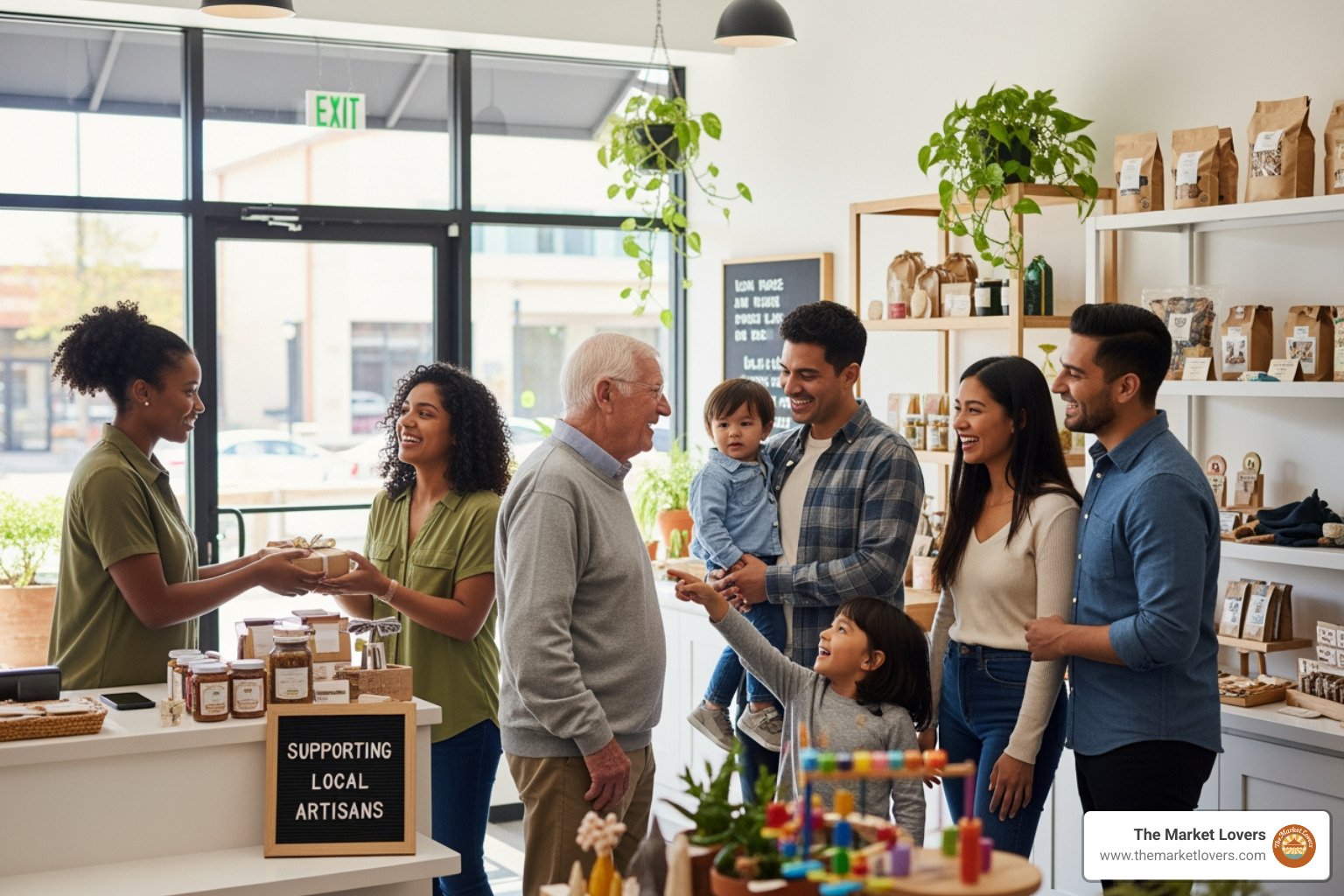
Even with the rise of e-commerce, the physical store remains a vital hub for customer interaction. Approximately 57% of consumers still prefer to shop at a physical store, and this is where we can truly shine as local businesses.
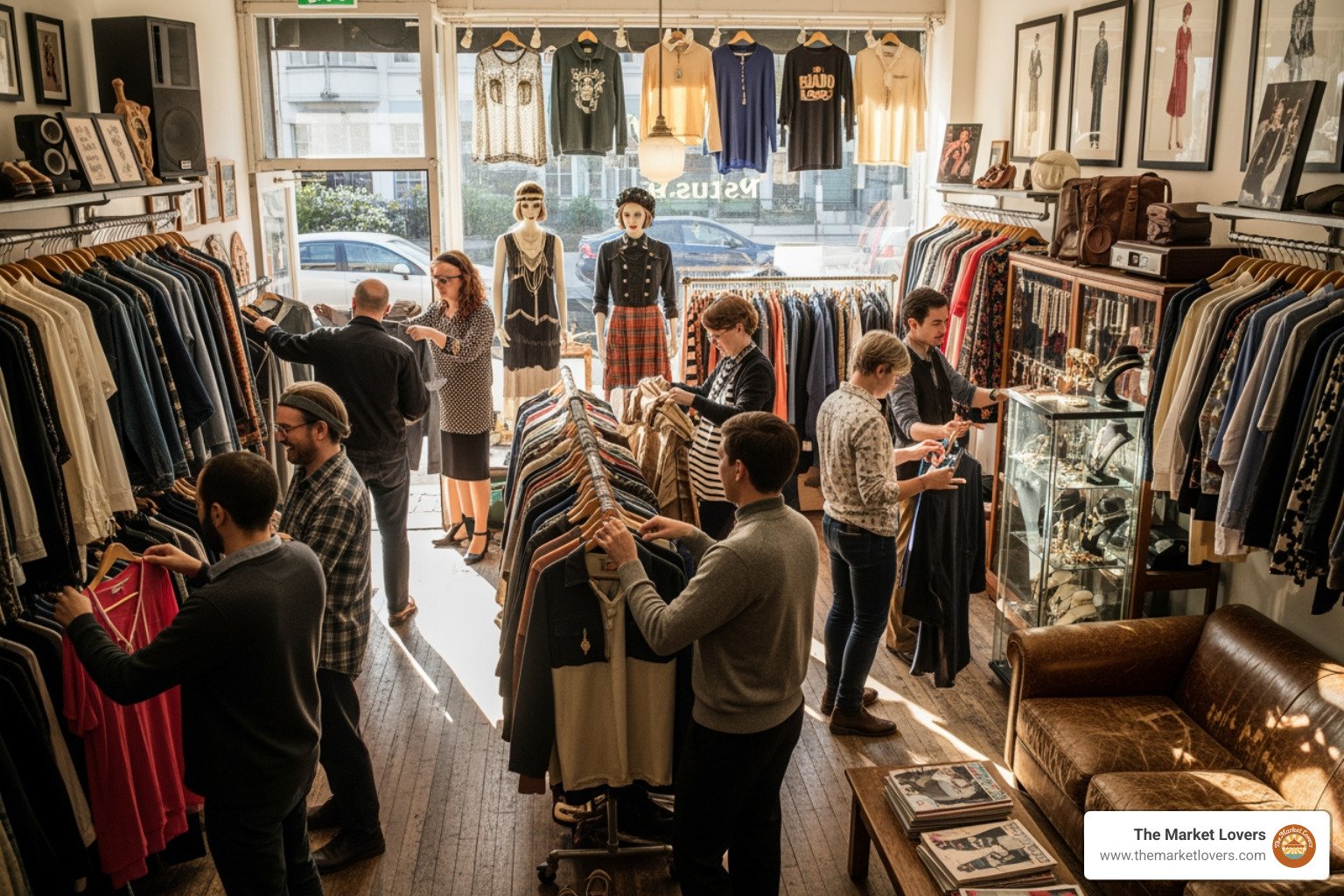
- Visual Merchandising: This is our silent salesperson. Eye-catching window displays, for example, influence purchases an average of 24% of the time. Good signage can increase sales by 10%. By organizing retail displays with a keen eye for color, lighting, and product placement, we can attract attention and motivate purchases. Think about creating an inviting atmosphere that encourages customers to linger and explore.
- Store Layout Optimization: How customers steer our store can significantly impact their purchases. A well-designed layout guides shoppers, highlights promotional items, and encourages impulse buys. Strategically placing smaller, high-margin items near the Point-of-Sale (POS) can lead to those delightful last-minute additions to their basket.
- Experiential Marketing: This is where we create memorable moments. Instead of just selling a product, we offer an experience. Take Canada Goose, for example, which created cold rooms in select retail locations, allowing customers to truly test their cold-weather gear before buying. Or consider furniture brands like Kroft, which use physical spaces to test new products and gather direct customer feedback. Research shows that 60% of shoppers now expect retailers to dedicate more floor space to experiences than products. This is a huge opportunity for us to engage customers on a deeper level.
- In-Store Events and Workshops: Hosting events is a powerful way to increase brand visibility and build deeper community ties. Whether it’s a product launch, a local artisan workshop, or a themed shopping night, these events bring people into our space and create a buzz. Fly by Jing, for instance, uses events and partnerships (like their collaboration with Disney and Shake Shack) to challenge perceptions and promote their brand.
- Point-of-Sale (POS) Promotions: Don’t underestimate the power of the checkout counter! Strategic placement of small products, samples, or marketing materials can drive impulse purchases. An optimized POS system also speeds up checkout, reduces wait times, and provides valuable data for us.
- Impeccable Customer Service: This is our bread and butter. Four out of five customers consider the experience a brand provides as important as the products they offer. Friendly, knowledgeable staff who are ready to assist without being pushy can make all the difference. Positive in-store interactions make customers feel good about shopping with us and encourage them to return.
Engaging In-Store Experience Ideas:
- Create interactive displays where customers can touch, try, or customize products.
- Host ‘meet the maker’ events featuring local artists or suppliers.
- Offer complimentary services like gift wrapping or product demonstrations.
- Use ambient elements like music, scent, and lighting to create a unique atmosphere.
- Organize scavenger hunts or small competitions to encourage exploration.
- Set up a comfortable lounge area for shoppers to relax and recharge.
2. Digital Marketing: Modern Retail Marketing Strategies
While in-store experiences are crucial, a comprehensive approach requires a strong digital presence. The key is an omnichannel approach, seamlessly blending our online and offline efforts. Nearly three out of four consumers use more than one channel to shop, and 84% expect retailers to integrate offline and online channels. This means our customers should have a consistent and smooth experience whether they’re browsing our website, visiting our store, or interacting on social media.
- Mobile Commerce (m-commerce): Our phones are practically glued to our hands, and customers are increasingly shopping on them. M-commerce is projected to account for two-thirds of net online sales growth between 2024 and 2028, with 94% of these sales occurring on smartphones by 2028. This means our websites and apps must be mobile-friendly, fast, and easy to steer. We need to reach customers wherever they are, and often, that’s on their mobile devices.
- Social Commerce: Social media isn’t just for sharing photos anymore; it’s a powerful shopping channel. 55% of Gen Z consumers in the US reported purchasing through a social media platform in the previous six months. US social commerce sales are expected to more than double by 2028, exceeding $141 billion USD. By allowing customers to shop directly through platforms like Instagram or TikTok, we can guide them from findy to purchase in a few taps.
- Email Marketing: Don’t underestimate the power of a well-crafted email. 60% of shoppers state they have made a purchase after receiving promotional email content. About one-third of marketers identify email marketing as providing the highest ROI, and those who segment their lists boost revenue by up to 760%. This is our direct line to customers, allowing us to send targeted promotions, personalized recommendations, and valuable content that keeps them engaged.
- Influencer Marketing: Partnering with the right influencers can significantly expand our reach. Influencer marketing campaign spending is projected to reach $9.29 billion in 2025, with over two-thirds of brands planning collaborations this year. Younger consumers, in particular, depend on influencers for recommendations. The key is to find authentic voices whose values align with ours, helping to promote our products to their engaged followers.
- Local SEO for Brick-and-Mortar Stores: For us, local businesses, optimizing for local search is absolutely critical. When customers search for “[product] near me,” we want to be at the top of that list. Local SEO helps us appear in “near me” searches, which have increased threefold in the past two years. Setting up and managing a comprehensive Google Business Profile, using local keywords on our website, and encouraging customer reviews are all vital steps to ensure nearby shoppers can easily find us.
3. Loyalty & Retention: Building Lasting Relationships
Attracting new customers is great, but keeping them coming back is where the real magic happens. Building strong customer relationships and fostering brand loyalty is one of the most effective retail marketing strategies for long-term success.
The benefits of customer retention are huge: a five-percent increase in customer retention can boost profits up to 95 percent. Happy customers aren’t just repeat buyers; they become our brand ambassadors, spreading positive word-of-mouth.
- Loyalty Programs: These are fantastic for incentivizing repeat purchases. Programs can offer tiered rewards, exclusive discounts, early access to new products, or special birthday offers, like Pacifica Beauty’s successful tiered system. The best part? Many modern POS systems can automatically track these programs, making them seamless for both us and our customers.
- Referral Programs: Leverage the power of happy customers by encouraging them to spread the word. Offering incentives for both the referrer and the new customer – like Rothy’s “give $20, get $20” offer – can be incredibly effective. Word-of-mouth marketing accounts for 13% of all consumer sales and is most popular in industries like electronics, groceries, and apparel.
- Customer Feedback Loops: Actively listening to our customers is a cornerstone of loyalty. By encouraging feedback and making customers feel heard, we’re not just improving our services; we’re building loyalty. Whether through surveys, social media interactions, or direct conversations, understanding their needs and addressing their concerns fosters a deeper connection.
- Building a Brand Community: As The Market Lovers, our mission is all about empowering local shopping through a connected network for small businesses. We believe in the power of community, and that extends to our own brands. Local partnerships, events, and a strong online presence can help us build a community around our business, fostering a sense of belonging and shared values. This is how we cultivate true brand loyalty that goes beyond just transactions. More about our mission to support small businesses.
Measuring Success and Embracing the Future of Retail
So, we’ve implemented some fantastic retail marketing strategies. But how do we know if they’re actually working? Measuring success and understanding our Return on Investment (ROI) is crucial for refining our efforts and ensuring sustainable growth. We also need to keep an eye on the horizon, as emerging technologies continue to reshape the retail landscape.
Key Performance Indicators (KPIs)
To measure the success of our marketing campaigns, we need to track specific Key Performance Indicators (KPIs). These metrics help us understand what’s working, what’s not, and where to allocate our resources.
- Customer Acquisition Cost (CAC): How much does it cost us to acquire a new customer?
- Customer Lifetime Value (CLV): How much revenue can we expect from a customer over their entire relationship with our business?
- Conversion Rate: The percentage of visitors who complete a desired action, like making a purchase.
- Retention Rate: The percentage of customers who continue to buy from us over time.
- Average Order Value (AOV): The average amount spent by a customer per transaction.
- Foot Traffic (for brick-and-mortar): The number of people entering our store.
- Dwell Time (for brick-and-mortar): How long customers spend in our store.
Return on Investment (ROI)
Measuring ROI for retail marketing can be complex, but it’s essential. We need to isolate marketing actions to accurately determine their impact. This might involve A/B testing different campaigns or using tools like brand lift studies to gauge how our ads influence consumer awareness and perception. For brick-and-mortar stores, footfall attribution studies are invaluable, connecting digital impressions to actual store visits and helping us understand the offline impact of our online campaigns.
| Metric | Digital Marketing Examples | In-Store Marketing Examples |
|---|---|---|
| Conversion Rate | Website purchases, email sign-ups, app downloads | Sales transactions, loyalty program sign-ups |
| CTR (Click-Through Rate) | Ad clicks, email link clicks | N/A |
| Foot Traffic | N/A | Number of visitors entering the store |
| Dwell Time | Website session duration, app usage | Average time spent by customers in the store |
| Engagement Rate | Social media likes, shares, comments | Customer interactions with staff, participation in events |
| Lead Generation | Online form submissions, newsletter subscriptions | In-store event registrations, customer contact card fills |
| Average Order Value (AOV) | Online basket size | Average transaction value at checkout |
Emerging Technologies Shaping the Future of Retail
The future of retail marketing is exciting, with new technologies constantly emerging to improve the customer experience. For us, embracing these can provide a competitive edge.
- Augmented Reality (AR) & Virtual Reality (VR): Millennials and Gen Zers are two to three times more likely to use emerging media like AR and VR to learn about products before purchasing. Imagine customers virtually trying on clothes from home or seeing how a piece of furniture would look in their living room. These immersive experiences bridge the gap between digital and physical shopping.
- Retail Media Networks (RMNs): These are becoming a big deal. 64% of executives at US retailers planned to implement an RMN by the end of 2024. RMNs allow brands to leverage a retailer’s proprietary customer data and ad inventory to reach a wider audience, often closer to the point of purchase. Even off-site retail media, like display ads on third-party websites or digital signage, is accounting for a growing share of ad spend.
- Metaverse Marketing: While it might sound like science fiction, the metaverse market is projected to reach over $800 billion by 2024. This hybrid world, blending physical and digital fields, offers unique opportunities for immersive customer experiences, like virtual fashion shows or interactive product launches.
By carefully measuring our efforts and staying open to innovation, we can ensure our retail marketing strategies are not just effective today, but future-proofed for tomorrow.
Frequently Asked Questions about Retail Marketing
What is the best retail strategy for a small business?
The best retail marketing strategy for a small business is one that prioritizes understanding your customers and consistently meeting their needs. This means focusing on:
- High-Quality Products: Offer products that genuinely solve a problem or bring joy to your customers.
- Excellent Customer Service: Provide personalized, friendly service that makes customers feel valued and encourages them to return.
- Relevant Marketing: Don’t try to be everywhere at once. Instead, focus on a few core marketing channels that effectively reach your target audience.
For us, this often translates into leveraging local advantages:
- Local Partnerships: Collaborate with complementary local businesses for cross-promotion and community events.
- Loyalty Programs: Incentivize repeat business with rewards that truly matter to your customers.
- Online Sales: Expand your reach beyond local shoppers with an easy-to-use online store.
- Local SEO: Ensure your business is easily found by nearby customers searching online.
- In-Store Interaction: Create positive, memorable experiences that differentiate you from larger competitors.
What are the key differences between traditional and digital retail marketing?
The key differences lie in reach, targeting, and measurability, but the most effective approach today is to blend them.
- Traditional Retail Marketing: This includes methods like print ads (newspapers, magazines), television and radio commercials, billboards, direct mail, and in-store promotions. It generally offers a broad reach and is excellent for building widespread brand awareness. However, it can be harder to target specific demographics precisely and to measure immediate ROI.
- Digital Retail Marketing: This encompasses online channels such as social media, email marketing, search engine optimization (SEO), content marketing, mobile apps, and paid online advertising. Digital marketing allows for highly targeted campaigns, often reaching specific demographics based on interests, location, or behavior. It’s also typically more cost-effective and offers robust analytics for precise measurement of campaign performance and ROI.
The synergy comes from an omnichannel approach, where we integrate both traditional and digital efforts to provide a seamless and consistent customer experience across all touchpoints. For instance, a print ad might drive traffic to our website, while a social media campaign encourages an in-store visit.
How do I measure the ROI of my marketing campaigns?
Measuring the ROI of your retail marketing strategies involves a combination of tracking financial outcomes and understanding customer behavior. Here’s how we approach it:
- Define Clear Objectives and KPIs: Before launching any campaign, establish what you want to achieve (e.g., increase sales by 15%, boost website traffic by 20%). Then, identify the specific KPIs that will indicate success, such as conversion rate, customer acquisition cost (CAC), customer lifetime value (CLV), or average order value (AOV).
- Track Everything: Use analytics tools (like Google Analytics for online, or advanced POS systems for in-store) to monitor website traffic, sales, customer interactions, and campaign performance. For email campaigns, track open rates, click-through rates, and conversions. For social media, monitor engagement, reach, and link clicks.
- Isolate Variables: To accurately determine the impact of a specific campaign, try to change only one variable at a time. This allows you to attribute results more directly.
- Footfall Attribution: For brick-and-mortar stores, this is crucial. Tools and studies can help connect digital ad impressions or clicks to actual in-store visits, providing a clearer picture of how online efforts drive offline sales.
- Brand Lift Studies: These measure how your marketing campaigns influence consumer awareness, perception, and intent. They help us understand the softer, but equally important, impact on our brand’s reputation.
- Calculate ROI: The basic formula is (Net Profit from Campaign – Campaign Cost) / Campaign Cost x 100. By consistently tracking and analyzing these metrics, we can optimize our marketing spend and improve the effectiveness of our retail marketing strategies.
Conclusion
The world of retail is constantly evolving, but one thing remains constant: the need for effective retail marketing strategies. From creating captivating in-store experiences to mastering the digital landscape and fostering deep customer loyalty, success lies in a cohesive, customer-centric, and adaptable approach.
For small businesses, this means leveraging our unique strengths – our authenticity, community connections, and ability to offer truly personalized service. By blending traditional charm with modern digital tools, measuring our impact, and embracing emerging technologies, we can not only compete but thrive.
At The Market Lovers, we are dedicated to empowering local shopping and building a connected network for small businesses. We believe that with the right strategies and a supportive community, every local business can achieve remarkable success.
Connect with our community of small business owners and access more resources.