
Why market vendors are the heartbeat of local communities
Market Vendors are the backbone of local commerce, bringing fresh food, handmade goods, and prepared foods directly to customers at farmers’ markets and public markets across North America. These small business owners—from farmers and bakers to artisans and food trucks—create vibrant community gathering spaces while building sustainable businesses.
What you need to know about market vendors:
- Who they are: Farmers, food producers, artisans, and crafters selling self-produced goods
- Where they sell: Weekly farmers’ markets, seasonal markets, public market halls, and special events
- What they offer: Fresh produce, meats, dairy, baked goods, prepared foods, handmade crafts, and specialty products
- Why they matter: They support local economies, create jobs, and connect communities to their food sources
- How to join: Apply through individual markets, meet producer-only requirements, obtain necessary licenses and insurance
The numbers tell a powerful story. In Alberta alone, 78% of households shop at farmers’ markets, spending an average of $70 per visit. That’s real money flowing directly to local producers and makers. These markets aren’t just shopping destinations—they’re business incubators where new entrepreneurs can test products, get instant customer feedback, and grow without the massive overhead of traditional retail.
“Markets are a unique opportunity to incubate new businesses or scale up to the next level,” according to vendor recruitment materials. The ByWard Public Market in Ottawa supports over 250 small businesses, while the City of Rochester Public Market has been “a busy and busy place, with many moving parts/pieces/people, for well over a century now.”
But becoming a market vendor isn’t as simple as showing up with products. Most markets require applications, insurance coverage (typically $1,000,000 minimum), food safety certifications, and adherence to producer-only rules. Vendors must prove they grew, made, or baked what they’re selling—no reselling allowed at most approved markets.
This guide unpacks everything you need to know about Market Vendors: who they are, what they sell, how markets support small businesses, and the practical steps to join their ranks.
Meet the Makers: A Tour of Vendor Types and Wares
When you stroll through a busy market, you’re greeted by a symphony of sights, sounds, and smells. This vibrant atmosphere is thanks to the incredible diversity of Market Vendors, each bringing their unique creations and stories to share. From the freshest produce straight from the farm to intricately crafted jewelry, there’s always something new and exciting to find.
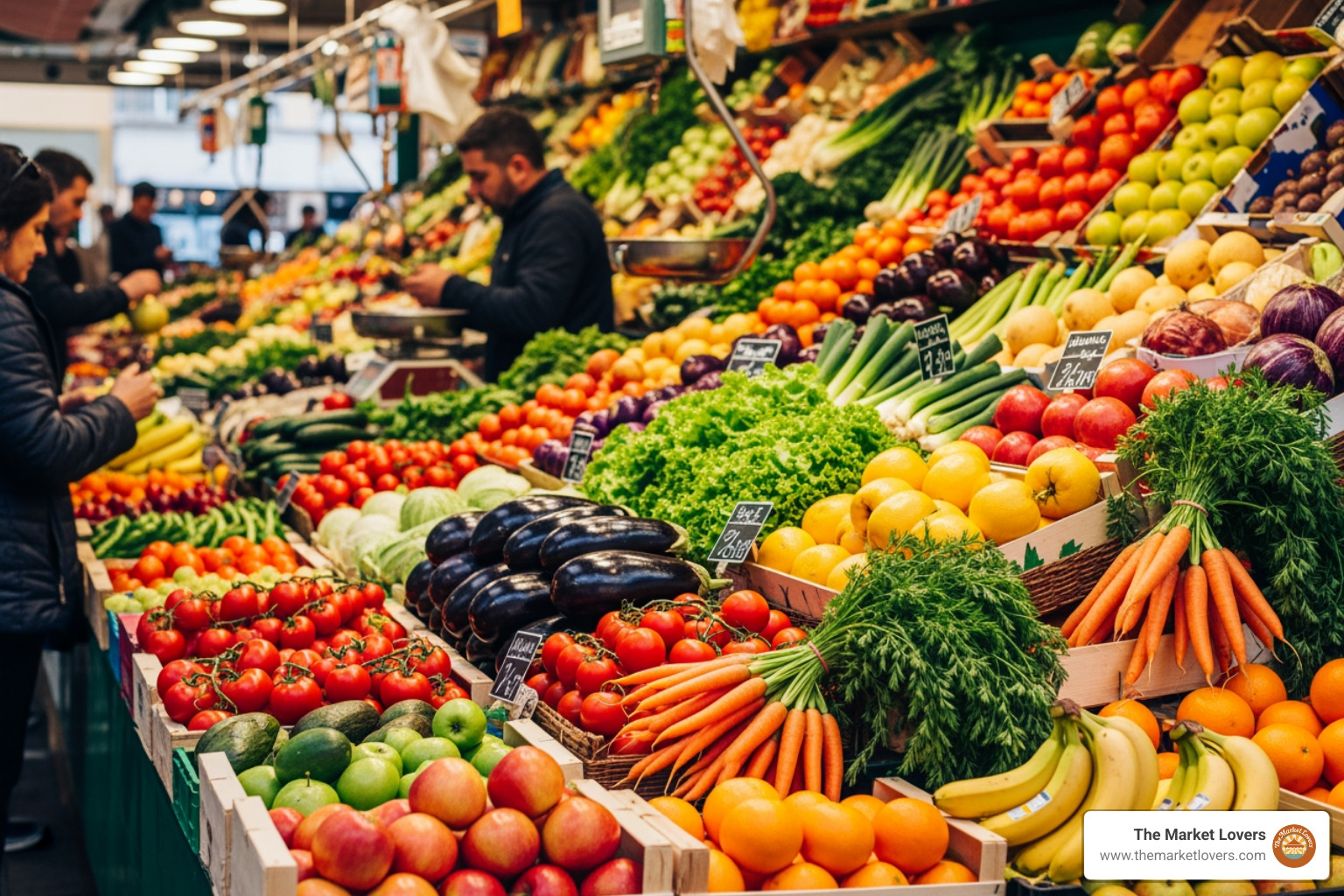
Market Vendors generally fall into a few key categories, though many blend these roles: agricultural producers, artisans and crafters, and prepared food vendors. Each type plays a vital role in creating the rich mix of products we love. To get a sense of the incredible variety, you can often Explore a directory of local vendors for specific markets.
The Growers & Producers
These are the backbone of many markets, especially farmers’ markets. They are the dedicated individuals who put their hands in the soil, tend to livestock, and harvest the bounty. We’re talking about farmers who bring us:
- Fresh produce: Seasonal fruits, vegetables, and herbs, often picked just days or even hours before market day. Many markets, like those in Pittsburgh, limit farm product sales to regional growers and producers within a 150-mile radius, ensuring true local sourcing.
- Meats and dairy: Locally raised and processed meats, artisanal cheeses, and fresh eggs from happy hens.
- Honey and maple syrup: Sweet treats directly from local apiaries and sugar bushes.
- Flowers and plants: Beautiful bouquets, potted plants, and even seedlings for your own garden.
- Farm-to-table products: Some growers also offer value-added products like jams, sauces, or baked goods made with their own farm ingredients.
The “producer-only” rule, common at many farmers’ markets, ensures that what you buy truly comes from the person selling it. This direct connection often means fresher, higher-quality products and a chance to learn exactly where your food comes from.
The Artisans & Crafters
Beyond food, markets are a treasure trove of unique, handmade goods. These Market Vendors pour their creativity and skill into every item, offering products you won’t find anywhere else. Their unique selling points often involve sustainable practices, repurposed materials, or deeply personal inspirations.
Here are just a few examples of the unique craft items you might find:
- Jewelry: From delicate copper pieces to stunning creations made from antique silver-plated cutlery, breathing new life into discarded items.
- Pottery: Hand-thrown bowls, mugs, and decorative pieces, each with its own character.
- Woodworking: Intricately carved items, functional cutting boards, or even unique home decor made from repurposed wood.
- Natural self-care products: Handmade soaps, lotions, candles (beeswax, soy wax), and essential oil blends, often created with natural ingredients due to personal experiences or a desire for chemical-free alternatives.
- Knitted items: Cozy scarves, hats, and blankets, perfect for cooler weather.
- Resin Art: Unique decorative pieces and jewelry.
- Pet Apparel: Stylish and functional accessories for our furry friends.
The stories behind these creations are often as compelling as the products themselves. For example, some vendors are inspired to create natural self-care products after a family member had a negative reaction to commercial products, while others use plasma cutters to transform hand saws into trees or roofing into garden decor.
The Foodies & Chefs
And then there’s the food! Beyond fresh produce, markets are a culinary delight, featuring an array of prepared foods and specialty items. These Market Vendors cater to every palate, from savory to sweet, and often offer convenient, ready-to-eat options. You can View a list of public market vendors to see the variety.
- Prepared foods: Gourmet-inspired grilled cheese sandwiches, falafel, curries, and other ready-to-eat meals, perfect for a quick bite while you shop.
- Baked goods: Artisanal breads (like sourdough fermented for 72 hours), cookies, butter tarts, pies, and even gluten-free and vegan options.
- Food trucks: Though not always present at every market, some offer a mobile culinary experience.
- Coffee roasters: Ethically sourced, small-batch artisan, and fair-trade coffees, often with a mission to deliver authentic experiences.
- Sauces and preserves: Spicy honey, cinnamon honey, jams, and unique sauces made from local ingredients.
- Ice cream: A refreshing treat on a warm market day.
- Superfood coffee alternatives: Innovative beverages for those looking for something different.
These vendors bring both convenience and gourmet flair, making the market a destination not just for ingredients, but for delicious meals and treats too.
More Than a Stall: The Perks of Being a Market Vendor
Being a Market Vendor is about much more than just selling products. It’s a dynamic experience that offers unique benefits, both for the individual entrepreneur and for the wider community. It’s a place where passion meets commerce, and where direct connections are forged.

From fostering new businesses to strengthening local economies, markets are vibrant hubs of activity. We believe in empowering local shopping through a connected network for small businesses, and these markets are perfect examples of that mission. Learn more about our mission to support small businesses and how we contribute to this ecosystem.
A Launchpad for Small Business
For many entrepreneurs, markets serve as an incredible starting point or a vital growth platform. They are a true “launchpad” for small businesses, offering benefits that traditional retail often can’t match:
- Testing ground for products: Imagine having a direct, immediate feedback loop for your new creations. Markets allow vendors to test new flavors, designs, or products with real customers and get instant reactions. This is invaluable for refining offerings before investing heavily.
- Direct customer feedback: You’re face-to-face with your customers. You hear what they love, what they want more of, and even what could be improved. This personal interaction builds loyalty and helps you tailor your business.
- Low start-up costs: Compared to opening a brick-and-mortar store, setting up a market stall is significantly more affordable. This lowers the barrier to entry for aspiring entrepreneurs.
- Building a brand: Markets provide a unique opportunity to tell your story, share your passion, and connect with customers on a personal level, which is crucial for building a strong, memorable brand.
- Business incubator: As the research highlights, “Markets are a unique opportunity to incubate new businesses or scale up to the next level!” They offer a supportive environment for growth and learning.
Building Community and Economy
The impact of Market Vendors extends far beyond individual sales. They are integral to the health and vibrancy of our local communities and economies.
- Supporting local farms: By providing a direct sales channel, markets help local farmers stay in business, encouraging sustainable agricultural practices and food security.
- Strengthening the local economy: When you buy from a market vendor, your money often stays within the local community, circulating among local producers, suppliers, and employees. In Alberta, for instance, 84% of spending at farmers’ markets is on local food, with an average of $70 spent per visit. This directly supports local jobs and businesses.
- Creating a social atmosphere: Markets are natural gathering places, fostering a sense of community. They are places where friends meet, families spend time together, and neighbors connect. This social aspect is a huge draw for the 78% of households that shop at farmers’ markets.
- Connecting with your customers: Customers value authenticity and trust. At markets, they get to meet the person who grew their vegetables or baked their bread, understanding the story and effort behind the product. This builds strong, lasting relationships.
- Incubating small businesses: Markets provide a platform for over 250 small businesses in some areas, like Ottawa’s Public Markets, fostering entrepreneurship and diversifying local offerings. Furthermore, in approved farmers’ markets, 80% of vendors must be Albertans selling products they, a family member, or staff member have made, baked, or grown, reinforcing local economic support.
Joining the Ranks: Your Guide to Becoming a Vendor
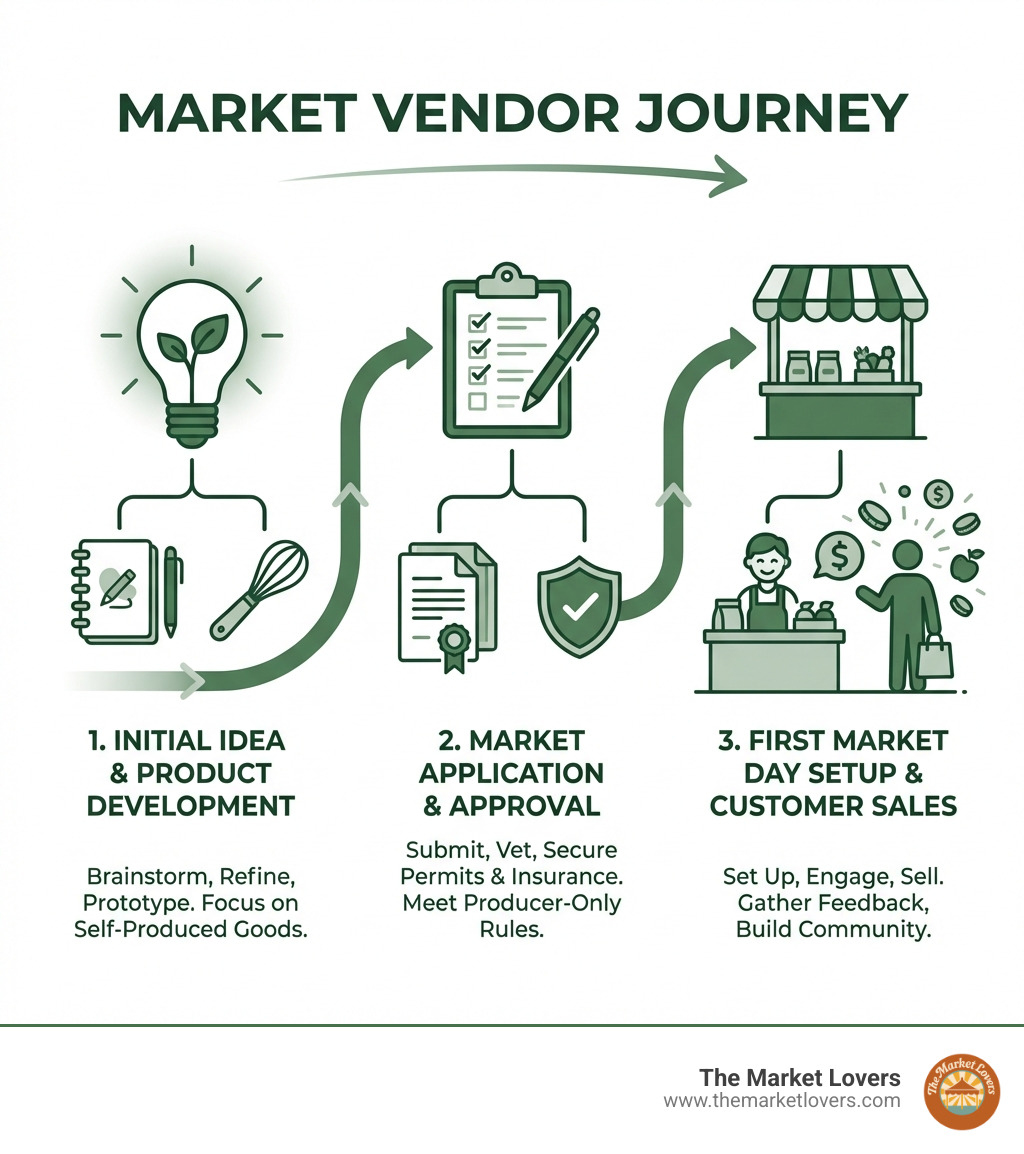
So, you’re inspired and ready to become a Market Vendor? Fantastic! Joining a market can be a rewarding experience, but it does involve a clear process. It’s not just about having a great product; it’s also about understanding the market’s rules, fees, and expectations.
We’ll walk you through the journey, from application to understanding the costs, so you can be well-prepared.
The Application Journey
The first step is usually the application. Each market will have its own process, but there are common themes:
- Finding a market: Start by visiting potential markets as a customer. Observe the products, the number of vendors, and the customer traffic. Talk to market managers about your product, space availability, and the application process.
- Application forms: These are your formal introduction to the market. You’ll typically find them online or at the market office. For example, the City of Rochester Public Market offers vendor application instructions on their website.
- Selection committees: Most markets have a committee that reviews applications. They’re often looking for local ingredients, high quality, and unique products that will add diversity to their existing vendor roster. They might even conduct informal interviews.
- Highlighting your unique story: Don’t just list your products; tell them what makes your business special! Do you have a unique falafel recipe? Are your cookies the best in town? Emphasize your unique twist and the passion behind your offerings.
- Vendor priority: Some markets give priority to vendors from previous seasons who are in good standing. This means consistent participation and adherence to rules can give you an edge, though selection is never guaranteed.
The goal is to show the market that you’ll be a valuable addition, bringing something special and high-quality to their community.
Understanding the Costs for Market Vendors
Becoming a Market Vendor isn’t free, but the costs are generally much lower than setting up a traditional retail store. It’s important to budget for these expenses so you can price your products appropriately and ensure profitability.
Here’s a breakdown of common costs:
- Membership fees: Many markets, especially non-profit associations, require a membership fee. For example, the Ottawa Farmers’ Market charges a non-refundable membership fee of $150.00 (plus HST) in the first year, and $50.00 (plus HST) in subsequent years.
- Stall rental costs: This is your fee to rent a space for each market day or season. These vary widely. In Alberta, average table/stall rentals were $22 in 2019, ranging from $5 per week to $79 per week. Some markets offer discounts for full-season commitment or payment plans.
- Insurance: Liability insurance is almost always a requirement. You’ll typically need general liability and property damage coverage, often no less than $1,000,000 personal / $2,000,000 aggregate, and you may need to name the market as an “Additional Insured.”
- Equipment needs: These are your initial investments to set up your stall:
- Tables and tablecloths
- Displays (to make your products look appealing!)
- Canopy (essential for outdoor markets, with weights for safety)
- Bags for customers
- Professional signage and price tags
- Scales (if selling by weight, they must be calibrated)
- Cash box or point-of-sale system
- Payment processing fees: If you accept electronic payments (which studies show can lead to higher sales!), you’ll have transaction fees.
- Costs of production: Don’t forget to factor in the cost of your raw materials, ingredients, labor, and time!
Here’s a simplified look at typical vendor costs:
| Cost Type | One-Time (Startup) | Recurring (Per Market/Annual) |
|---|---|---|
| Fees | Initial Membership Fees | Annual Membership Fees, Stall Rental Fees (daily, weekly, seasonal) |
| Essentials | Canopy, Tables, Displays, Scales, Signage | Packaging, Bags, Labels |
| Operations | Point-of-Sale System, Fire Extinguisher | Liability Insurance Premiums, Payment Processing Fees, Production Costs |
| Miscellaneous | Logo wear, Nametags, Cash Box | Travel Expenses, Staff Wages |
The Nitty-Gritty: Rules and Requirements for Market Vendors
To ensure a smooth and successful market experience for everyone, Market Vendors operate within a framework of rules and regulations. These guidelines cover everything from how you set up your stall to food safety and professional conduct. Understanding and following these rules is key to being a well-loved and long-standing vendor.
These rules help maintain the market’s quality, safety, and community spirit.
Playing by the Rules
Each market will have its own set of guidelines, often compiled in a market handbook or by-laws. Here are some common areas of focus:
- Market handbooks: These documents (like the Ottawa Farmers’ Market’s By-laws and Vendors’ Handbook) contain all the details you need to know. Make sure to read them thoroughly!
- Attendance and lateness policies: Markets rely on consistent vendor presence. There are often strict rules about arriving on time, setting up by a certain hour, and staying for the entire market duration. For example, Pittsburgh’s Farmers Market Program has a “Three Strikes Rule” for repeated lateness or absence, which can lead to warnings, suspension, or even removal. It’s crucial to notify the market manager immediately if you’re going to be late or absent.
- Stall presentation: Markets want a professional and inviting look. This means keeping your space neat, clean, and organized. Clear signage with your business name and product prices is often required, as customers are less likely to trust vendors who don’t display this information. Secure your tent or canopy properly, especially in windy conditions, as stakes are often not permitted.
- Professionalism: Always be ready to tell your story and engage positively with customers. Professional attire, name tags, and a welcoming smile go a long way. If a customer has a complaint, make it right – even if you think they’re wrong. Markets also enforce zero-tolerance policies against discrimination and harassment to ensure a safe space for all.
- Customer service: The market is a social place. Vendors are expected to create a welcoming and safe space, contributing positively to the overall atmosphere.
Safety First: Licensing and Food Regulations
For Market Vendors, especially those selling food, safety is paramount. Markets work closely with health authorities to ensure all products are safe for consumption.
- Food safety training: Many regions require specific food safety training. In Alberta, vendors selling food must complete ‘Food Safety Basics for Farmers’ Markets’ through Alberta Health Services within one year of becoming a new vendor.
- Health department permits: If you’re selling prepared foods, you’ll need the appropriate permits from your local health department (e.g., Ottawa Health, Allegheny County Health Department). This often includes having a food safety plan and on-site equipment like fire extinguishers for prepared food vendors.
- Liability insurance: As mentioned, robust liability insurance is a non-negotiable requirement for most markets. This protects both you and the market in case of an incident.
- Product labeling: All food, cosmetic, and textile products must be properly labeled according to federal guidelines (e.g., Canadian Food Inspection Agency). This includes ingredient lists, allergen warnings, and producer information. For detailed guidance, you can Consult this official Food Safety Guide for Farmers’ Markets.
- Weights and Measures: If you sell by weight, your scales must be certified and calibrated.
Adhering to these safety and licensing requirements protects your customers, your business, and the market’s reputation.
Frequently Asked Questions about Market Vendors
We often get questions from aspiring Market Vendors and curious shoppers alike. Here are some of the most common inquiries, shedding light on the specifics of market operations.
Can I sell products I didn’t make myself?
This is a big one, and the answer is usually no for most approved farmers’ markets. Many markets operate on a “producer-only” model.
- Producer-only markets: These markets require that all products offered for sale must be grown or produced by the applying vendor, a family member, or staff. This is to ensure authenticity and support direct farm-to-consumer or maker-to-consumer sales. For example, 80% of vendors at approved Alberta farmers’ markets must be Albertans selling their own products. The Ottawa Farmers’ Market also adheres to a producer-only model, with agricultural vendors requiring products to be grown within 100 km of Ottawa.
- Reselling rules: Generally, businesses that are simply importers or resellers are not eligible. However, some markets might allow a farmer vendor to resell a small amount of farm products not grown by them if they apply for and receive written approval beforehand, and the products meet local sourcing requirements (e.g., within a 150-mile radius in Pittsburgh). These products must be listed on the application.
- Consignment policies: While rare, some markets might have specific, limited consignment rules, but it’s not the norm for the primary goods sold.
- Sourcing verification: Market teams often reserve the right to verify production and sourcing practices annually to maintain integrity.
The core idea is transparency and supporting the direct efforts of the people selling to you.
Do I need a registered business to be a vendor?
Not always, but it’s highly recommended and often a requirement for certain aspects.
- Sole proprietorship: Many small-scale Market Vendors operate as sole proprietors without formal business registration initially.
- Registered business requirements: While formal registration might not be universally mandatory for all vendors (especially small hobbyists), you will almost certainly need to meet other requirements that often align with being a legitimate business.
- Insurance needs: As discussed, liability insurance is crucial. Insurers typically require you to operate as a legitimate entity, even if it’s a sole proprietorship.
- Tax obligations: Regardless of registration, you’ll have tax obligations for your sales.
- Business credit: For those looking to grow, establishing business credit is essential. Even without formal registration, you can use vendor credit as a strategy to build credit history and manage cash flow. As the SBA advises, vendor credit allows you to buy now and pay later, helping to build a positive payment history.
It’s best to check with each market’s specific vendor handbook and local regulations to understand what’s required in your area.
How much money can you make as a market vendor?
The earning potential for a Market Vendor can vary greatly, depending on many factors. There isn’t a single answer, but we can look at what influences it:
- Sales variation: Your sales will depend on your product’s appeal, quality, pricing, and how effectively you market it.
- Product pricing: It’s crucial to price your products to cover all your costs – not just ingredients, but also your time, market fees, insurance, and equipment.
- Customer traffic: Busy markets with high foot traffic naturally offer more sales opportunities. Some markets attract thousands of visitors on a single day.
- Market location: The specific market and its clientele can impact sales. Some markets might cater to higher-income shoppers, while others might focus on affordability.
- Electronic payments increasing sales: “Studies have shown that vendors who accept electronic payments have higher sales.” Offering options like credit/debit card payments can significantly boost your revenue.
- Average spending: In places like Alberta, households spend an average of $70 per visit at farmers’ markets. Your goal is to capture a good portion of that spending!
- Vendor skill: Your merchandising, customer service, and ability to tell your product’s story all contribute to your sales success.
While some vendors might generate a modest income, others build thriving businesses that scale up from their market stalls. It’s a journey that combines passion, hard work, and smart business practices.
Conclusion
The world of Market Vendors is a vibrant ecosystem, teeming with passionate individuals who bring incredible products and experiences to our communities. From the dedicated farmers nurturing their crops to the skilled artisans crafting unique treasures and the talented chefs preparing delicious foods, these vendors are truly the heartbeat of local commerce.
We’ve explored the diverse types of vendors, the undeniable benefits of being part of a market community, and the practical steps involved in joining these ranks. Markets serve as invaluable incubators for small businesses, offering low-cost entry, direct customer feedback, and a supportive environment for growth. They also play a crucial role in strengthening local economies and fostering a strong sense of community.
At The Market Lovers, we are committed to empowering local shopping through a connected network for small businesses. We believe that by supporting Market Vendors, we’re not just buying goods; we’re investing in local dreams, sustainable practices, and the rich mix of our neighborhoods.
Ready to take the next step, whether as a customer or an aspiring vendor? The Market Lovers is here to support your journey.